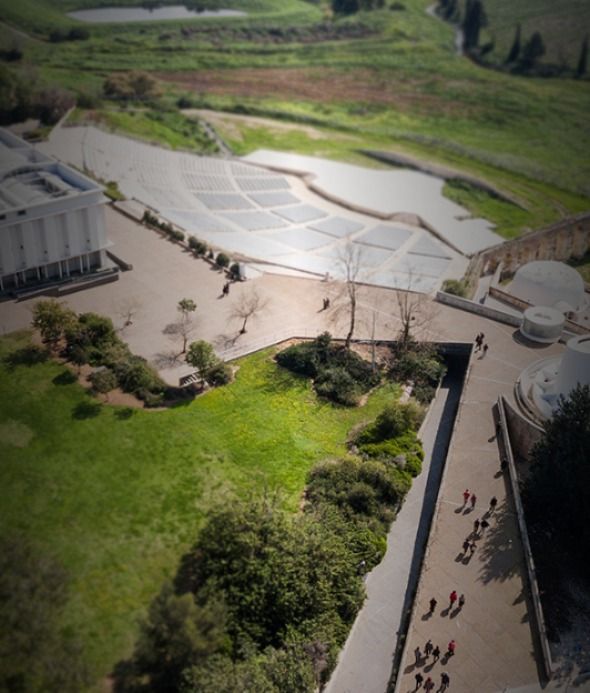
"We came here to build houses full of life" (Yitzhak Zuckerman)
With Assistance from the Conference on Jewish Material Claims Against Germany Sponsored by the Foundation "Remembrance, Responsibility and Future" Supported by the German Federal Ministry of Finance
A school for the human spirit
With Assistance from the Conference on Jewish Material Claims Against Germany Sponsored by the Foundation "Remembrance, Responsibility and Future" Supported by the German Federal Ministry of Finance
What's on
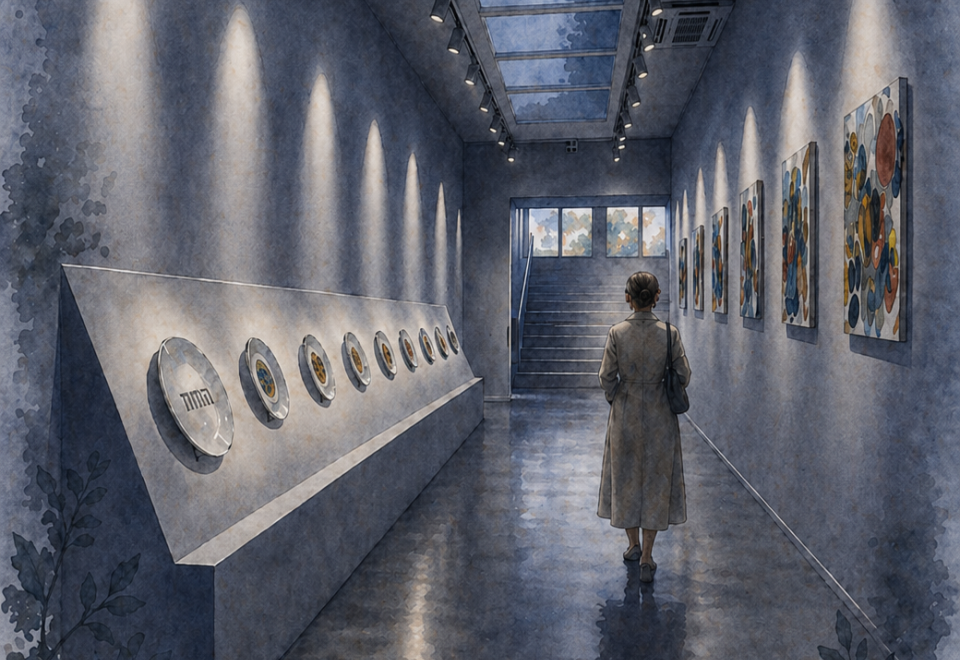
Selected Exhibitions
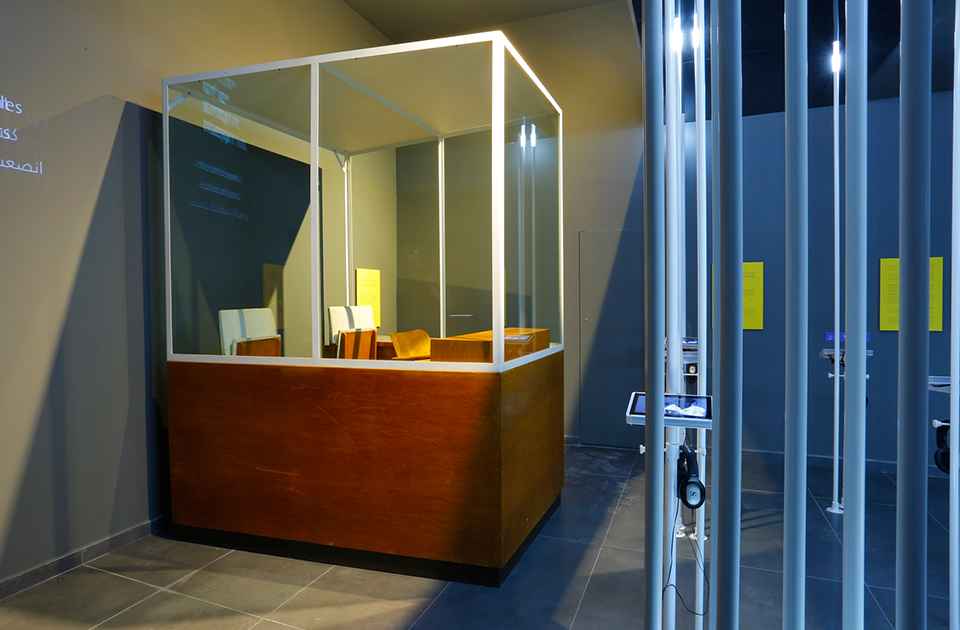 Permanent
Facing the Glass Booth
Features the original booth in which Adolf Eichmann sat during his trial
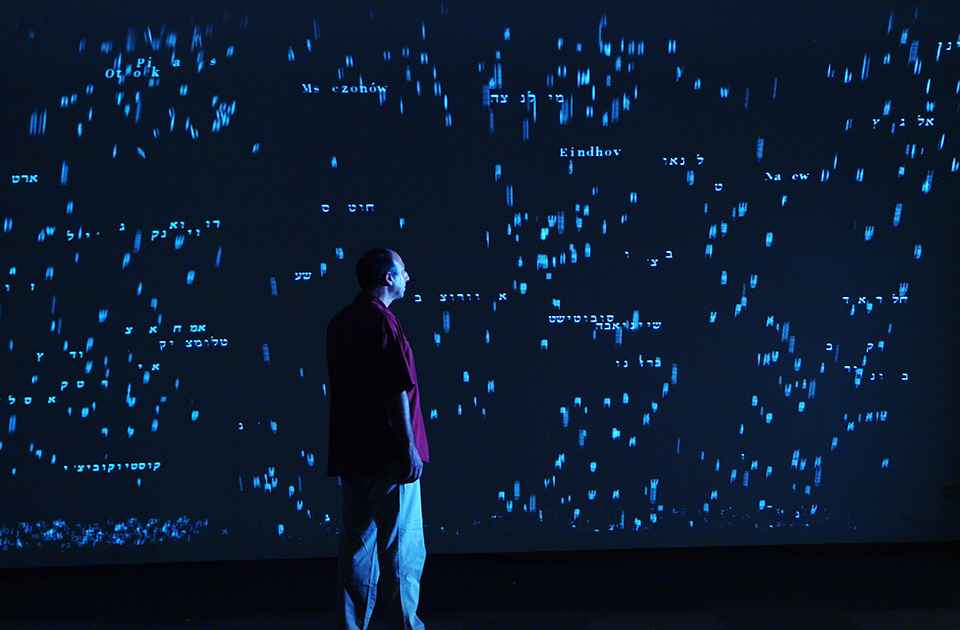
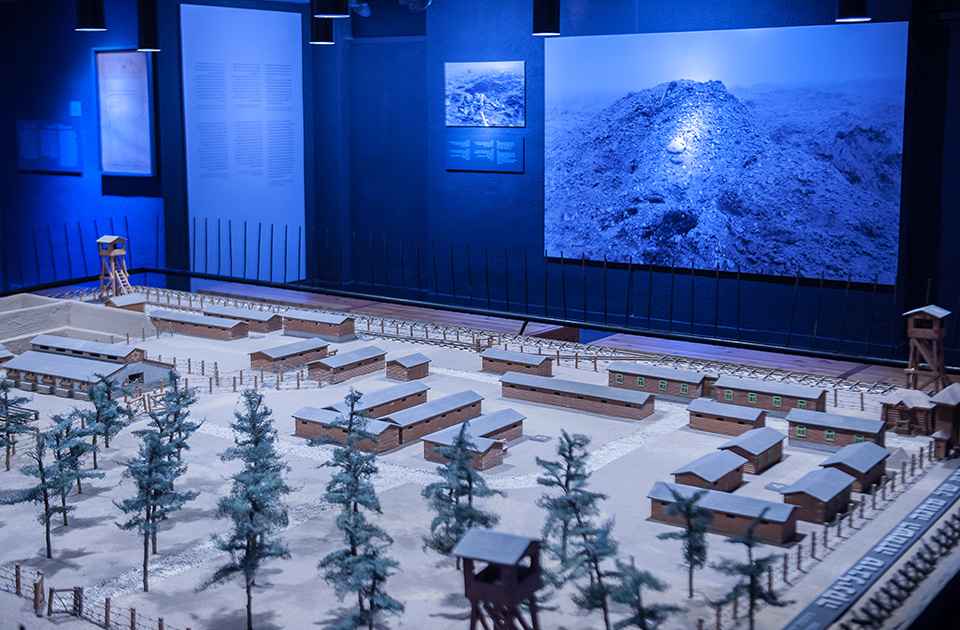 Permanent
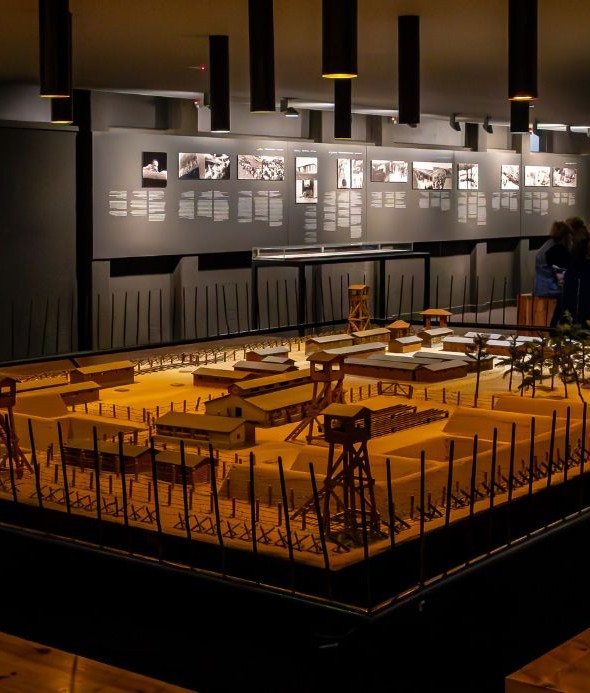
Concentration and Extermination Camps
The industry that was the extermination of Europe’s Jews
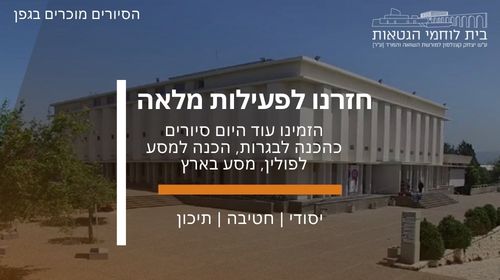
We have returned to full activity
Book your tours today
Opening Hours:
Sunday – Thursday
08:00 – 16:00
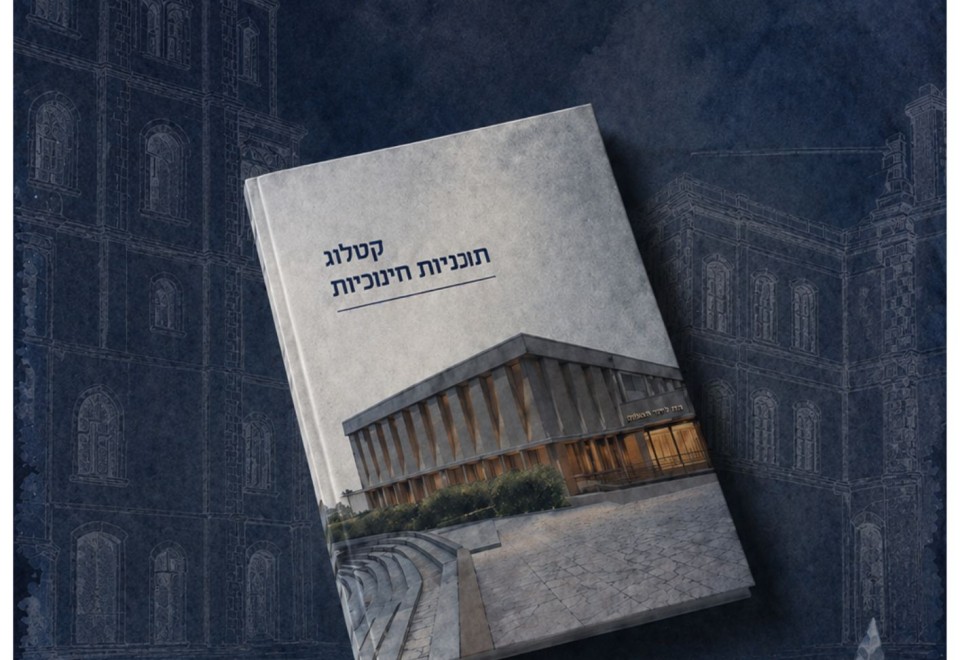
To receive a program catalog, please fill out the form.
Ghetto Fighters' House Museum Archive
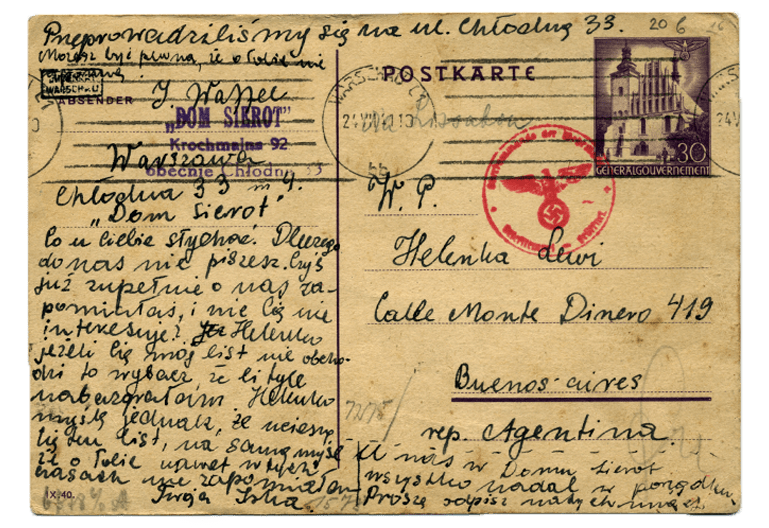
The Ghetto Fighters' House archive continues its collection of archival materials: artifacts, photographs and documents from the years preceding World War II, from the war period, as well as from the first years after the liberation.
Contact the Archive
If you are interested in meeting with the Archive staff, we recommend that you call beforehand in order to make an appointment:
04-9958031
04-9958032
04-9958025
Research Room
The Research Room of the Ghetto Fighters’ House Archives was established as a memorial to the Jewish community of Mlawa, Poland. It was funded through the donation made by the Association of Jews from Mlawa in Israel and with the support of the Conference on Jewish Material Claims Against Germany (Claims Conference). The intranet system installed on the room’s computers allows users to search throughout the GFH Archives collections and access digitized documents, photographs, images of artifacts and artworks, as well as audio and video testimonies.
The Research Room is open to the general public in Israel and abroad. Students, teachers, academics, and researchers − whether visiting individually or in groups − are invited to explore the archival materials. Access to the Research Room is by prior appointment only.
The GFH Archives staff is available to provide guidance and assist visitors with their inquiries.
To schedule a visit and inquiries:
04-9958031
04-9958032
04-9958025
Submission of an inquiry form
Opening hours
Sunday through Thursday: 9:00 – 16:00
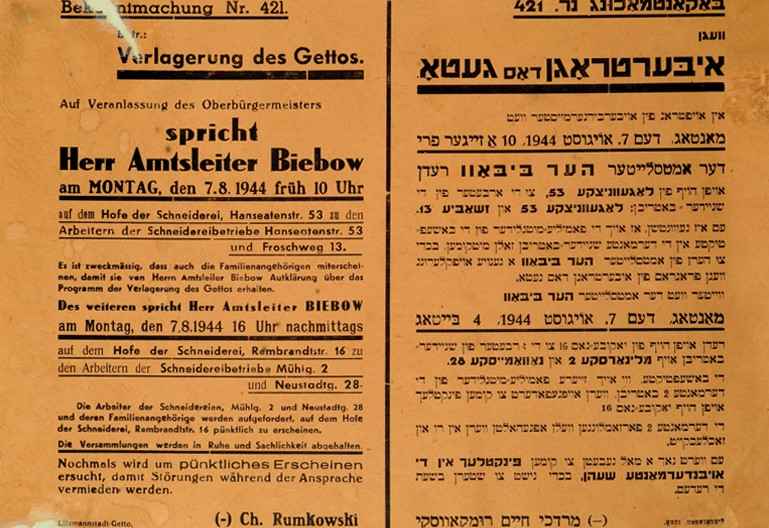
[In the photo: Notice No. 421 from the Łódź Ghetto, signed by Chaim Rumkowski]
Photographs Archive
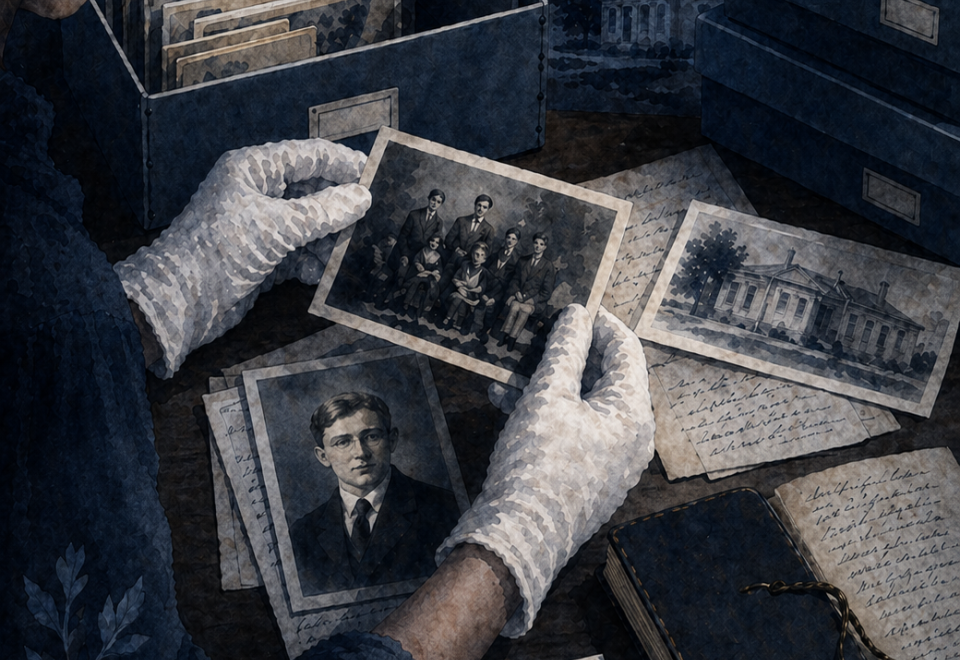
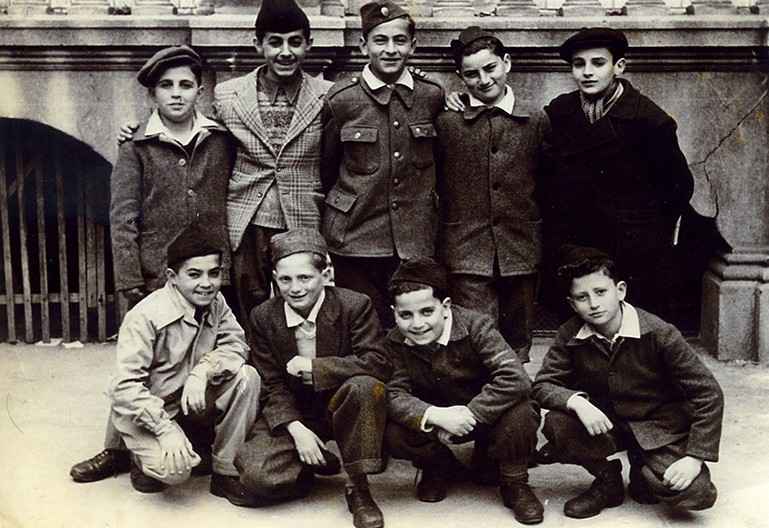
The Photo Archive at the Ghetto Fighters’ House (GFH) holds tens of thousands of photographs from three main periods:
- The rise of the Nazis, the Second World War, and the Holocaust
- The decades preceding WWII
- Holocaust survivors and the history of the Jewish people in the years directly following the Holocaust
The photographs from the first period deal with the history of the Jewish people at that time, but also photos of that period among other peoples and lands, the war, various kinds of propaganda, etc.
From the photographs in the second category we can learn about the daily life of Jews and non-Jews, primarily in Europe, from the beginning of the 20th century. The majority of the photos under this heading were taken in the period between the two World Wars.
Photographs belonging to the third period are from various countries, with emphasis on Jewish life. A large portion of these photos are of aid and rescue operations by and for Jews: redeeming children; the organization “Ha-Bricha” for getting Holocaust survivors out of postwar Europe to Mandate Palestine; the Displaced Persons’ camps in several countries; the British detention camps on Cyprus for unauthorized immigrants to Mandate Palestine, and more.
The Photo Archive also holds hundreds of photograph albums that allow the researcher access to collections of data by topic. The majority of the photographs, as well as many of the albums, have been computerized, and the public can search the online archive of the GFH website and view material free of charge.
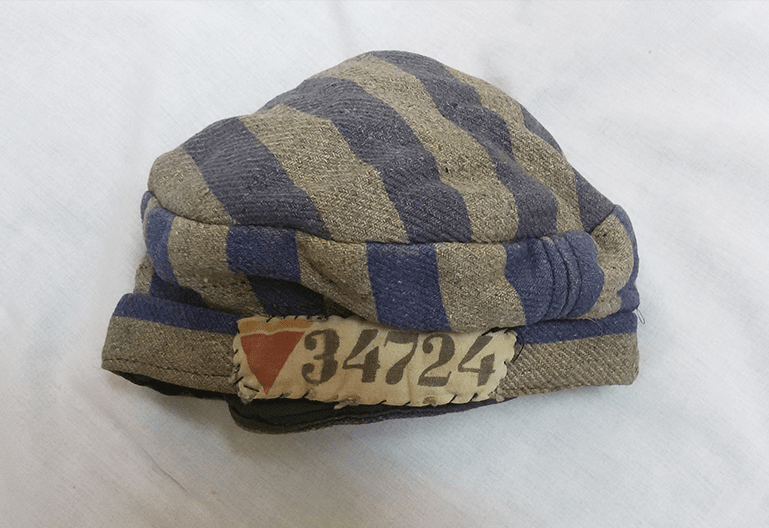
Artifacts Section
Objects have a voice; they tell a story.
Thousands of artifacts are preserved in the GFH Archives. Some serve as testimony to the life of Jewish communities and their cultural wealth in the days that preceded the Second World War.
The majority of the items in the collection tell of the Holocaust period, and through them it’s possible to learn about the life of Jews in the ghettos, the mass extermination, as well as survival, rescue, and mutual aid, acts of spiritual resistance and fighting the Nazis. There are objects accompanied by a personal story that turns them into historical witnesses, and there are anonymous objects collected on the grounds of extermination camps.
Other objects tell the stories of survivors at the moment of their liberation, of their time of recovery and rehabilitation in the postwar DP camps, on the clandestine paths across the borders of Europe in attempts to emigrate, while languishing in detention camps on Cyprus and in starting their renewed lives.
Some 400 items from the Artifacts Collection are displayed in the “Yizkor” Hall exhibition. Behind smoked glass walls are the treasures of the Ghetto Fighters’ House Archives. Visitors to the exhibition are exposed to the artifacts in the glass-fronted drawers and to the stories they have to tell.
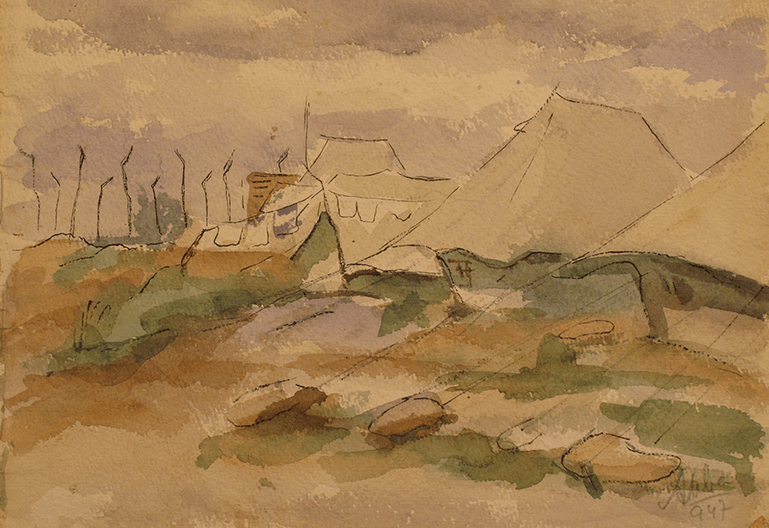
Art Collection
The GFH Art Collection holds thousands of one-of-a-kind drawings, oil paintings and sculptures. The collection, one of the most important of its kind, was established in the 1950s. The intention of museum founders’ was to commemorate Jewish artists who perished in the Holocaust and to preserve testimonies in drawings by those few artists who survived.
Of the artworks in the Collection made in the years before the mass exterminations, the majority are from the ghettos, with fewer from the peak years of the extermination. Others were made immediately following the liberation, as reportage after the fact. Some works present valuable testimony of the highest degree. These are the eyewitness testimonies created by survivors of the camps and those who observed the exterminations, drawings made at the time of the events (1941–1945) or directly afterwards (1945–1950).
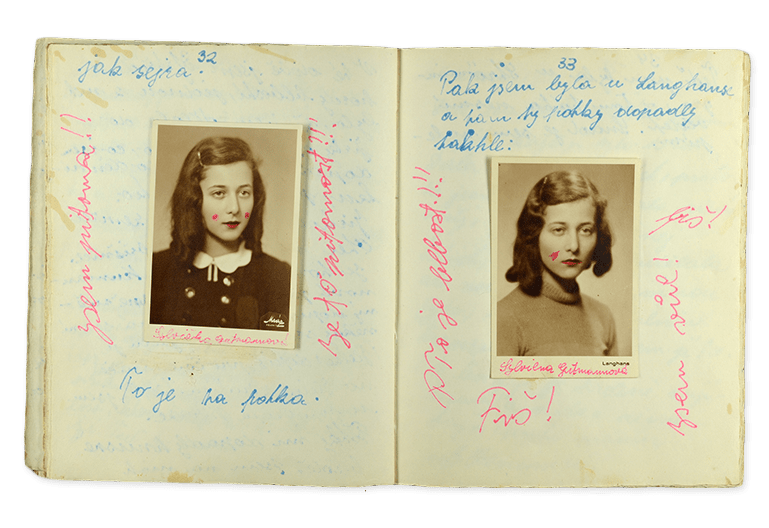
Donate to the Collections
The GFH Archives continue to collect archival materials: artifacts, photos, art works and documents (letters, diaries, memoirs, personal documents, and more) from the prewar era (Jewish life, culture, youth movements etc.), the wartime period and early post-liberation years (Sh'erit ha-Pletah, displaced persons camps, detention camps in Cyprus).
If you are in possession of such materials, we will be happy to receive them. They will be restored (if necessary), translated and carefully deciphered/contextualized. Once the materials are processed, they will be digitized and preserved in the archive under optimal conservation conditions. These materials will contribute to our effort of commemorating the victims, documenting the Holocaust, and advancing research into its history.
To donate materials to the GFH Archives:
04-9958031
04-9958032
04-9958025
Submit an inquiry form
[In the photo: Pages from Sylvie Guttmannova's diary, written in occupied Prague]